Waiting Too Long

* * *
Sometimes we wait too long to be surprised by people who, we know, will just disappoint us.
d
Model: Natalia Gnatyuk Model Mayhem #2675167

* * *
Sometimes we wait too long to be surprised by people who, we know, will just disappoint us.
d
Model: Natalia Gnatyuk Model Mayhem #2675167

* * *
So, sometimes things look like this to me. I’m not even kidding. Everything I touch feels immense. Everything I see looks like an entire universe and I can’t handle it. I feel every atom in each breath , my heart pumps out oceans of blood through me. And if I move too suddenly, the earth with tear itself apart.
Friends say I often have a natural high, well sometimes I have a natural trippyness too!

I made this to prove a point:
This was shot with my phone and edited on my laptop at a cafe. I was talking to a person I just met and showing her that you don’t need a fancy camera to make cool images. You just need to follow through with your ideas, no matter what tools you have.
Then she said, “But, I’ll still need photoshop…”
Point denied!! hahahaha
I’m going to find people an accessible processing software so I don’t run into this problem again.

A frame seems to protect the content from its audience. Preserving it for a future audience that will always never come.
What if I could take down any art piece appreciate it with touch, rotation, smell, basically interact with it like a person. Sure, it makes the piece vulnerable to damage and takes away from its “sellability” but what’s the big deal?
d
Why is it that if others touched a piece that it degrades the specialness it has. How much in our lives is any different? Do we not assume that our loved ones have been with others in the past yet we love them all the same. Let go and appreciate things when you have them and don’t assume they won’t have a life of their own after you.
d
Also, how much in my life has been self-framed to keep me from being vulnerable and unopened to what I could experience?

Feeling like I am disappearing into myself at times. So, I make photos that reflect this and then I feel better.
People ask me what I am doing. I say shooting my journal.

. . .
I empty myself through creation.
I generate more of myself to survive my loss.
I create more or else I completely disappear.
. . .

It’s amazing how advanced our society has become. So many intellectual, medicinal, and technological improvements have been made available for so many in such a short period of time. I am in awe of the solutions people have come up with in recent years to make people’s lives better and richer(intellectually). But with these leaps of mankind have also brought the accelerated depletion of natural habitats, resources, and most of all the dignity and decency towards those who produce our modern marvels.
It’s easy to be blinded by our achievements and sit back imagining ways to solve our resource challenges or create non-profits to support the oppressed. But what are we doing to change the way we live so we don’t have to even come to that point?
I don’t even know what I can do besides talk about it and reduce how much crap I buy. But that’s not enough for me. I don’t want to keep talking about what I care about, I want to start living a life that cares. Though, I don’t know how to do that yet.
I valued our “progress” more than addressing environmental effects or human dignity because I’d say it’s for the greater good. The greater good is not served by abusing people who if I knew them could very well be a best friend of mine. These injustices are reported as isolated cases but these “isolated” cases are happening in every field and every country around the world. It’s not longer “The few for the many” it’s now “The many for the few”.
The worst part is that I don’t know what I can do about it nor even if I would follow through with a change.

When something really nice happens in my life I immediately start preparing for how to continue being happy should it go away. It’s a cruel thing to do to myself, despite the self-preservation. I hardly get to enjoy the moment and the gift of spontaneity.
On the other side of things… When something really nice happens I tend to think about it too much. I drown myself in thoughts and disappear from the the world of the living and exist in my fast paced imagination.
The third thing I do when something nice happens is that I day dream about it until it turns on itself and I end up imagining all the ways it could end. None of the scenarios are what I would want for myself.
I think my imagination always searches for an end to a story. I’m a story teller and it’s real hard for me not to anticipate how a story will turn out. Personal experience does not provide too many happy endings, but that’s just it, real life never ends at the close of a book or at the credits. In movies and books we never see how the lives of characters unfold after the story. I leave those stories okay with assumptions and never lose sleep wondering about them. But of course it’s not my life so it’s not something I’d care to figure out for them.
Okay random example:
I’m on a plane and I imagine all the ways I could die: Crash on takeoff, fuselage failure and I get sucked out, die in the engine, die after free fall, crash due to pilot error in a storm, die trying to stop terrorists, survive the crash but burn to death in the wreckage, crushed slowly by debris, slowly freeze in the Atlantic. Once I get that out of the way, I imagine all the ways I could survive: surviving on a snowy mountain top like in “Alive”, living in a forest or jungle after escaping the exploding wreckage, floating in the ocean with other passengers, figuring out how to live through the heat of the Sahara Desert, escaping the aircraft after a minor crash landing at the airport. Then I patiently calm and convince myself that death isn’t all that bad, as long as it’s quick, most likely an air crash would be. But I don’t want to be surprised with fear and dread should we nose dive and flip upside-down to our deaths. I want to be okay with it. I want to clear my head of regret and not pray to God for another chance. If this is it then I’m fine. I lived an awesome life and it’s okay that this is all I get.
How morbid is that?! I do it so I won’t have to suffer during the fall. Yet, I ruin most of my flight worrying. I try to convince myself that when I get on a plane, I am as good as dead and to be okay with it from the beginning. Personally, I don’t think this is the right way to go about it. I’d rather not assume life or death as a possibility. I’d rather continue as I do walking down the street.
In the same way I’d like to reduce the amount of “Air Crash Scenarios” in my day to day life. Though, I feel like it’s a responsible thing to anticipate possibilities, I remind of myself when Qui Gon Gin advised Obi Wan Kenobi to yes, be mindful of the future but “Not at the expense of the moment.”
Currently, I’m doing a good job at that.

When I know what someone is going to say and I know I am not going to like it, I avoid them as much as possible. Recently, I’ve found it’s because I know they have a point and I don’t know a better way to change or explain what I’ve done. I just wanted them to see I tried my hardest and for them to admire even my half-assed attempts at creation. But really, if I’m doing something and it isn’t coming across the way I hoped, there is no easy way to accept the fact that I failed.
There are people whos’ opinions I cannot wait to hear about my work. Eagerly, I reach out for their input, I take it in like fairy dust and I float without feeling judged or misunderstood. With them I feel free and happy to communicate my ideas and together we collaborate improving my vision. But there are also those who I can not stand hearing from. They take a shallow step into my world and decide too quickly that it’s several things that they do not like. I try to avoid getting their input, but from time to time I’ll ask the most critical of them to take a look. The thing is, I think the same as they do and that part of me wants to see what it would look like if I failed. There is a person who makes himself known inside my head (particularly in the morning) and hates everything I think is great.
Example: After I’ve stayed up all night on a project, he wakes up, takes a look at it and as though all context and aesthetic were transparent he sees through to my canvas, seeing nothing there.
“Crap.”, he declares. I respond, “What? It’s great. Look how they seem to be judged by inanimate objects but the irony is…” He cuts me off, “Looks like you’re being obvious and that’s coming through more than you know. Others will think so, I wouldn’t post it.”
Feeling content with his appraisal, he leaves me defeated and wondering why I even bother making anything ever. But wait… being obvious isn’t a bad thing. In fact, I intended on being obvious! That’s not something I was afraid of, and yes I do hope people see it that way. If I let him speak for me I often forget that the negatives he sees are often the intentions I had in the first place. It’s funny how quickly I can get defensive about something that I hadn’t realized was a strength all along.
The other side of it is positive, too. If he attacks the core of my work and I don’t have a solid reason to uphold it then my idea crumbles. Sounds bad but wait there’s more.
When I get negative criticism about my work I feel like, “Well, they just don’t know what I’m trying to do.” Instead of trying to explain myself, I avoid talking about it all together. Most often I don’t actually know enough to explain what I did and when it’s hard to communicate my ideas I just say, “Well, it’s just hard to explain what’s in my mind.” I expect my critics just to respect my opinion and leave it alone, but the real smart ones then ask, “Well, then why did you ask me to look at it?”
The real answer is, again, I just wanted the approval. But I’m finding that those who question my work offer something more valuable – purpose. It may come across with lots of negative energy but if I picture someone else saying it (Julie Andrews) I can see the issues a lot easier.
The fact is, sometimes I fail. Instead of weakening an idea by settling with a sub-par image, I can openly say, “Yeah, I didn’t get the shot.” This can ultimately save the purpose the shoot. Being honest with myself may mean re-doing something that took a long time or accepting that I had missed a unique opportunity. It’s hard to see failures as lessons for the next time, especially when I need money for rent. But the quicker I can define what I am doing, the faster I can re-focus my efforts into something that works. Even if I can’t, at least I gave myself the opportunity to improve.
This turned into kind of a ramble but remember:
1) Don’t be defensive about strengths.
2) Be honest with what you intend on accomplishing.

Whenever I dream that I’ve been without pants, no one seems to notice nor care. Now I figure, “Well why should I?”
If society doesn’t care about my exposed self then there must be nothing wrong. It feels great to just go about my business without a care how I look or how others may perceive me.
I assume this has to be my subconscious telling me that whatever I’ve been ashamed about isn’t all that big of a deal. Now I need to figure out just what I’m insecure about and not mind so much in real life… yeah good luck, me.
Being self-aware (self-conscious) is so strange. Like crossing a tight rope; once I think about how well I am doing I begin to fail. Why is there a “confidence auto-destruct” built into myself?
Most of the time I self-destruct before I even try. There are times I have to trick myself to get out of the apartment for shoots. My mind is resisting but I’ve told my body, “Just take us; he’ll do fine once we’re there.”
About the Shot:
I just needed her to look somewhat towards the camera. If I had her eyes looking away from the direction of the crowd it would complete the “self-aware subject” idea. The scene being very dark and my hands cold and I was ensured that every shot would be a blurred mess. Trying not to think about that I continued shooting muttering to myself, “Please look towards the camera, look at the camera, the camera, look at the camera…” And then she disappeared.
“damn it…”
I looked through my shots anyway and they were all actually sharp except for the one where she begins to look towards me.
“God Damn It!”
Then the last frame was right before I lost sight of her behind the crossing guard. Her face had stopped moving and the shot was crisp!
“Got it, got the damn photo.”
Editing wise: As if she needs anymore attention, I dodged her hair.

Nikon SB-900
Hands down the best flash out there.
. . .

Canon 580 EX II
Flash gun that attaches to Canon’s hotshoe. Decent flash but its’ menus and buttons make it a pain to use.
. . .
When selecting lenses know that there is no perfect lens because they are all perfect. Awwww, but it’s true! Even if it’s broken. “This lens is perfect when I want things out of focus.”, “I use this lens specifically for its lens flares and chromatic aberrations.” Everything has a purpose. The key is to know what situations to use them in. Too many see it the other way around. They buy or want a lens solely because of its properties like focal length or f-stop. Get a lens because you know how it will treat your compositions. Sure wide angles are great for landscapes but did you know that they allow you to get closer to subjects while retaining their environments? Or that the difference between many similar telephoto lenses isn’t how far they can see but their minimum focusing distances (Boom! macro photography)?
Part of planning my assignments is deciding a shot each lens and camera would be best. In this way, a lot of my shoots happen before I get there. When the time comes for taking a photo I can relax and not struggle with which lens to use or that the normal lens I am using has too shallow of a depth of field at 2.8. It’s beyond uncomfortable to ask a model to wait for just a second after every shot. It’s also irresponsible to gamble a historic event on a new medium format camera that I’ve never used. I mean, I heard someone did that once.
Hopefully this page will help figuring out what lenses do. And if it doesn’t please email me or comment on how I horrible I am doing.
. . .
some lenses can be moused over to see an example shot
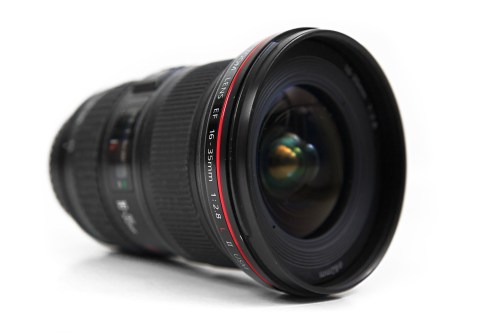
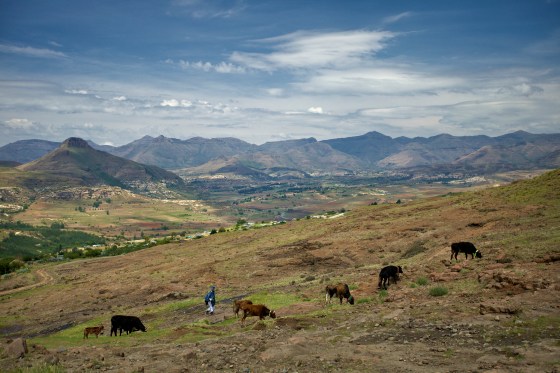
Canon EF 16-35mm f2.8 L II USM
Very high quality images come from this lens, even at 2.8 it’s surprisingly sharp. My favorite use is shooting timelapses of wide landscapes. Keep in mind that at close distances the edges tend to distort. I sometimes end up with “egg-head” people if they venture too far to the corners. (For that reason I use Nikon’s 17-35 at close ranges. Nikon’s lens will still distort but less dramatically.) The lens is weather resistant except for the front element, you will need a filter to seal the part of the lens that sticks out slightly when zooming.
.
.
.

Canon EF 24-105mm f4 L IS USM
Probably the most versatile lens I’ve ever used. This is my buddy. Everywhere I go he goes. The difference between the 24-70 and the 24-105 isn’t so much the 2.8 vs 4.0 (Cameras now have such high ISOs) nor is it an issue with image quality (which there is but not when talking about use). The difference is the environment in which I would use them. For me the extra reach at 105 really comes in handy when I am not sure of my environment (i.e. journalistic, street, documentary). But if I was doing a more familiar shoot and/or with lighting control, I’d go with 24-70 to take advantage of the great image quality. It’s about not which lens is better, it’s about which lens makes more sense for the situation.
.
.
.
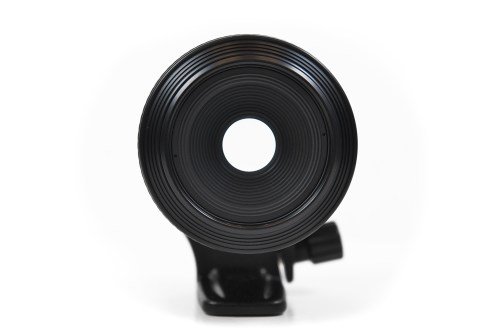
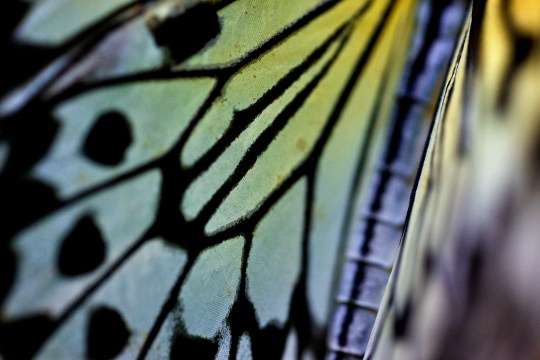
Canon Macro MP-65 65mm f2.8 1:1 – 5:1
Magical lens that allows me to see tiny worlds that exist on a speck of dust or clump of algae. It can reproduce an image not just life size but 5 times life size, it’s basically a microscope. The focus is VERY shallow and you may need to use photo-stacking tools to get a portrait of a dragon fly, but this lens is worth all the trouble. I have to admit that this was an impulse buy. A 5 month long impulse that had me searching from one side of the internet to the other for the best macro lens I could get. Though, in all my research the one thing that I didn’t think of looking up was how far away it could focus. Why would ? It’s for macro photography after all… well, with this lens I can see as far as 6 inches or so, maybe less. I always say, “Know why you are buying a lens.” I had no idea how specific I had gotten. Be careful out there, but this lens is awesome!
. . .
The nature of our motivation determines the character of our work – Dahlia Lama
some lenses can be moused over to see an example shot

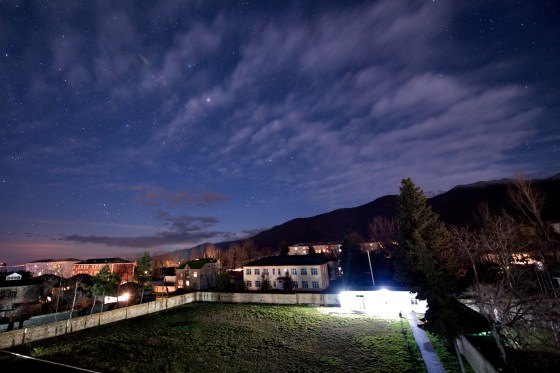
Nikon 14-24mm f2.8
Epic lens! I search for reasons to use this lens whenever possible. It’s my go to lens for wide angles of the night sky and landscapes in general. Keep in mind at 14mm and in close distances it distorts like crazy but that’s to be expected at 14mm. The chromatic aberrations are minimal, sharpness is consistent, and it’s gorgeous. The only down side is that it’s heavy and not so great indoors (distortion). I usually have to plan its use instead of always having it available on me. Oh, and there’s no slot or threading for filters.
.
.
.
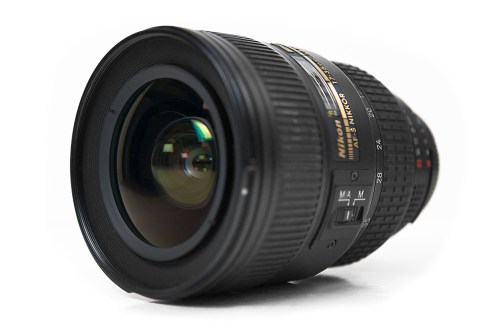
Nikon 17-35mm f2.8
Being able to zoom fro 17-35 is very handy in composing wide angle shots. 14-24 is not nearly as useful as the 17-35 when dealing with dynamic and close range compositions. When I am shooting outdoors I use Canon’s 16-35 because, personally, I like how Canon reproduces colors. But when I am indoors I use Nikon’s 17-35 because it has low distortion at close ranges. This is definitely one of my favorite lenses.
.
.
.

Nikkor 24-70mm f2.8
I use this lens almost exclusively with a lighting system. In the field I use Canon’s 24-105 over one shoulder and on my other shoulder I have a Nikon with a 17-24mm. The reason I do this is because it’s faster to have two cameras than switching lenses and the D700 that I use is better for low light photography. In this way I have most of my bases covered.
.
.
.
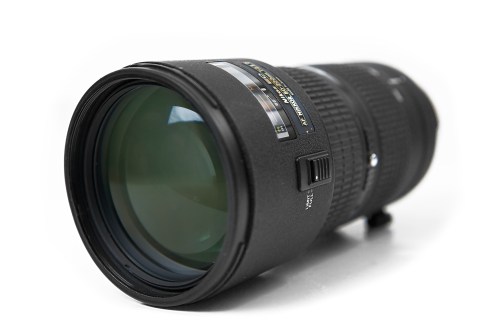
Nikkor 80-200mm f2.8
This telephoto range is indispensable. I use this lens from portraits to stage events. The fixed f2.8 also helps keep the image sharp in low light. This particular lens is an oldie but a goodie. It’s outlasted two camera bodies and has survived multiple drops and one submersion. Even though there is a little bit of a rattle, it has super fast focus and awesome image quality. But it’s had its day. It lacks image stabilization which helps low light shooting handheld by at most a stop. It also weighs as much as a brick. I’d highly recommend a newer 80-200n with Image Stabilization.
. . .
Being wrong is not the same as being creative. But if you aren’t okay with being wrong, you will not come up with anything original. – Sir Ken Robinson
High quality lenses from days of yore. Excellent for beautiful DOF & bokeh. I especially use them in low light environments.
These lenses can be attached to any Nikon camera digital or film. They can also be attached to a Canon with an adaptor.
Completely manual focus. The focusing ring can spin for days, great for precise focusing at low apertures and video.
some lenses can be moused over to see an example shot
 Nikkor 35mm f1.4
Full body portrait lens. Primary street photography lens. Very low distortion at edges.
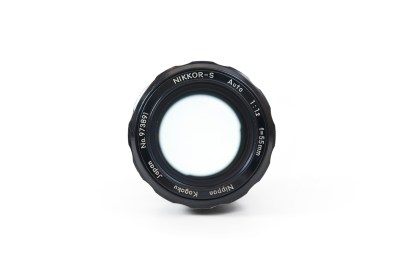

Nikkor 55mm f1.2
At f1.2 this lens can literally see in the dark. Very soft images wide open. Excellent detail stopped down at f4.
 Nikkor 85mm f2
Primary portrait lens. Great for street photography.
 Nikkor 105mm f2.5
Portrait lens. 105 is great to compress the background against the subject.
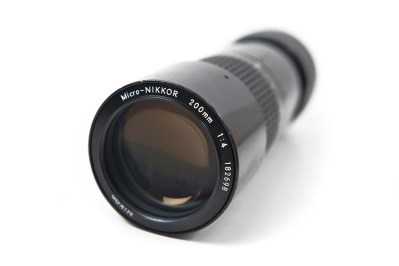
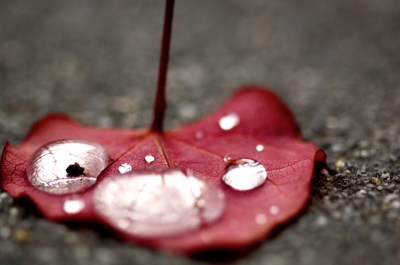
Nikkor 200mm f4
Primarily used as a macro lens. I can get very close and extremely detailed images. Used with LiveView for precise focus.
. . .
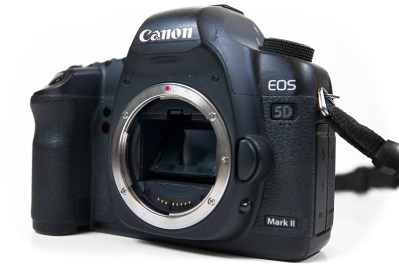 Canon 5D Mark II
This is my trusty workhorse. Rain, shine, sleet or snow this camera pulls its weight in gold.
. . .
 Nikon D700
The best camera I’ve ever used in low light environments. It is also the center piece of the best flash network I’ve ever used. The camera is solid. It’s been in all types of weather without issue.
. . .
 Rolleiflex Tessar 75mm f3.5
Shooting with this camera is pure joy. I love knobs, dials, and buttons so for me this has it all. The processed film feels like I’m looking through a window. The detail and color (Fuji Velvia, Astia, and Provia) is astounding.
d
Here is some collector info:
Rolleiflex f3.5 Tessar M-X E-V (1737690) TLR Bay I with Original Case, 1954
. . .
 Foldex 20 105mm Octvar ~f8
This was my first medium format camera. It had belonged to my grandfather since the late fifties. He also had a flash that went with the camera but I broke it after pretending it was a UFO. Though I grew up with the camera in my room, it wasn’t until after college that I first loaded film into it. When I did it felt complete.
Information on this camera is hard to come by, but I’ve seen three types:
1) 86mm Octvar Lens, metal film advance knobs ~1950-53.
2) Foldex 30, gray top instead of black, Steinheil Munchen 100mm f6.3 Cassar anastigmat type lens in a Vario shutter ~1953.
3) 105mm Octvar, black plastic film advance knobs ~1955.
The Foldex is a flash synced version. Some cameras that are called Rollex and Comet are the exact same camera but are not flash synced. I could be wrong on the dates but it’s the best I could gather from roaming the internets.
. . .
 Holga CFN 80mm f8
Its size makes it hard to carry another camera, and if you don’t pay attention it’ll take pictures of what it wants. It makes me feel like it grew up as an only child. Every Holga Lens is different, but they all produce dreamy images through its plastic lens. Which is why this Holga is two Holgas pieced together. The lens, nameplate, back, & flash knob are from my 1st Holga. I broke my first one but wanted to keep the lens.
. . .

Eastman Kodak No. 1 Pocket Camera f11 Meniscus Lens, 1926
While I’ve seen most versions of this camera with a sharper anastigmat lens, mine has an older meniscus type lens. I had originally thought the lens was missing its forward element but I did some internetting and found out that it’s a single concave lens element (have you ever seen a concave photo lens?) located behind the aperture and shutter blades. This was pretty common in most Kodak folding cameras of the time, but not so much with the No.1 Pocket Camera (not “vest pocket camera”, yes there is a difference).
This piece also has an octagon engraved nameplate bolted on the front of the folded camera which reads, “Virginia Berner – National City, Calif.” I tried my best (w/o spending money on background checks) to find this person or a descendent but to no avail.
. . .
 Edward Steven Perry